Best-Selling Author and Neuroscientist Dr. Bruce Perry will be the Keynote Speaker at the Fourth Annual Community Convening
June 17, 2026
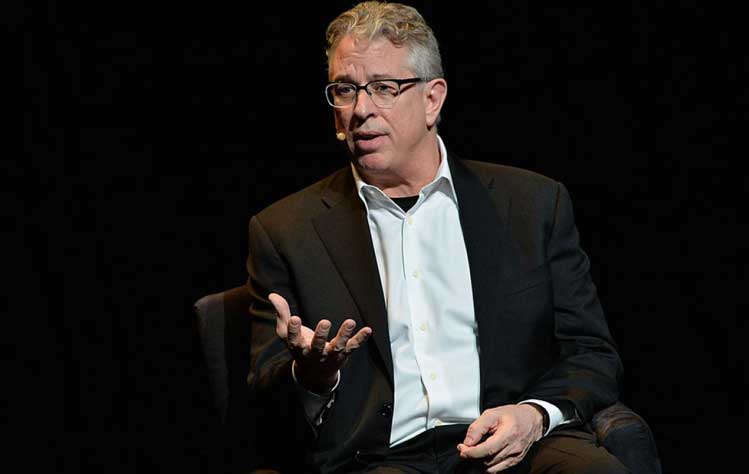
Bruce D. Perry, M.D., PhD, author and co-author of the best-selling books “The Boy Who Was Raised as a Dog,” “Born for Love: Why Empathy is Essential and Endangered,” and “What Happened to You? Conversations on Trauma, Resilience, and Healing,” will deliver the keynote address for the fourth annual Community Convening, a day-long series of workshops for mental health professionals at Webster University.
This year, the conference will focus on “Beyond the Individual: Creating Trauma-Informed Communities and Systems.” Lectures will focus on expanding our understanding of trauma beyond the individual level to consider the roles of systems, communities, and collaborative responses in promoting healing and access to care.
The event is hosted by Webster University’s Department of Professional Counseling and the Webster Institute for Clinical Scholarship. It will be held from 7:30 a.m. to 5 p.m. on Oct. 3 on Webster’s campus in Webster Groves. The event is sponsored through a grant from the Chiron Community Giving Foundation (CCGF). The conference is free and open to the public. Registration will open on August 1.
“We are thrilled that Dr. Bruce Perry will kick off this conference,” said Muthoni Musangali, Professor in Webster’s Department of Professional Counseling. “Over the last 40 years, Dr. Perry has been an active teacher, clinician and researcher in children’s mental health and the neurosciences holding a variety of academic positions, as well as working with numerous communities impacted by traumatic events. His work on the impact of abuse, neglect and trauma on development has informed clinical practice, programs and policy across the world, and I believe that we will learn a lot from hearing him at the conference.”
Perry currently is the principal of the Neurosequential Network and an adjunct professor at the School of Allied Health, Human Services and Sport, La Trobe University, Melbourne, Australia. He previously served on the faculty of the Departments of Pharmacology and Psychiatry at the University of Chicago School of Medicine; served as the Trammell Research Professor of Child Psychiatry at Baylor College of Medicine in Houston, Texas, where he also was chief of psychiatry for Texas Children's Hospital and Vice-Chairman for Research within the Department of Psychiatry; served as the Medical Director for Provincial Programs in Children's Mental Health for the Alberta Mental Health Board; and was an adjunct professor in the Departments of Psychiatry and Behavioral Sciences at the Feinberg School of Medicine at Northwestern University in Chicago.
His neuroscience research examined the impact of prenatal drug exposure, the neurobiology of human neuropsychiatric disorders, the neurophysiology of trauma and adversity, and the development of neurotransmitter receptors in the brain. His clinical research and practice focused on the complex impact of developmental adversity, including examining the cognitive, behavioral, emotional, social, and physiological effects of developmental adversity, such as neglect and trauma, as well as the positive and resilience-building effects of healthy relational connections.
This work has resulted in innovative clinical practices and programs, including the Neurosequential Model©, a developmentally sensitive, neurobiology-informed approach to clinical work (NMT), education (NME), caregiving (NMC), and sport (NM Sport). The Neurosequential Model© has been integrated into practice and programs at hundreds of public, private, and non-profit organizations in every state and in over 26 countries, impacting an estimated 4 million people worldwide.
Internationally recognized for his work, he served as a consultant to numerous government agencies in high-profile incidents that involved children, including the Branch Davidian siege in Waco (1993), the Oklahoma City bombing (1995), the Columbine school shootings (1999), the September 11th terrorist attacks (2001), Hurricane Katrina (2005), the FLDS polygamist sect (2008), the earthquake in Haiti (2010), the tsunami in Tohoku, Japan (2011), the Sandy Hook Elementary school shootings (2012), the Camp wildfire in California (2018), and the Turkey-Syria earthquake (2022).
He has published over 500 journal articles, book chapters, and scientific proceedings and is the recipient of numerous professional awards and honors, including the T. Berry Brazelton Infant Mental Health Advocacy Award, the Award for Leadership in Public Child Welfare, the Alberta Centennial Medal, and the 2014 Kohl Education Prize. In 2024 he received the National Alliance on Mental Illness (NAMI) Scientific Research Award and the NAMI Exemplary Psychiatrist Award. In 2025, Casey Family Programs selected Dr. Perry for the Casey Excellence for Children Award (Leadership). He serves on the Board of Directors of multiple organizations, including the National Association for Children of Addiction (NACoA) and the Ana Grace Project. He is a Lifetime Member and Vice-Chairman of the Board at Prevent Child Abuse America.
He has made presentations on his work at the White House Summitt, to the California Assembly, to the U.S. House Committee on Education, and at South by Southwest. He has been featured in numerous media interviews, including National Public Radio, the Today Show, Nightline, CNN, and the Oprah Winfrey Show, The New York Times, The Washington Post and Rolling Stone magazine.
After Perry’s opening speech, the conference will break into numerous panels and workshops led by many other experts. There also will be an opportunity to earn up to four Continuing Education Units (CEU’s) for Licensed Professional Counselors, Licensed Clinical Social Workers, and other select helping professionals.
Please watch the Webster Institute for Clinical Scholarship page for a registration link and more information.